
Co-creating a TEK-based climate curriculum with indigenous Jahai communities

From 6 to 9 September 2025, Cottage Inn in Gerik, Perak became the meeting point for indigenous Jahai community representatives, teachers, agency officers, non-governmental organisation (NGO) representatives and researchers. The four-day participatory workshop sought to bridge indigenous ecological knowledge with climate education, creating opportunities for meaningful collaboration. The programme aimed to co-create a climate curriculum rooted in indigenous Jahai traditional ecological knowledge (TEK) and strengthen partnerships between communities and education stakeholders. The workshop, structured in two key parts – a community-led session followed by a multi-agency discussion – underscored how indigenous ecological knowledge can inform and enrich climate education in Malaysia.
The first session, held on 7 September 2025, centred on the voices of indigenous Jahai communities. A total of 22 community representatives from Kampung Air Banun, Kampung Sungai Raba, Kampung Desa Permai, Kampung Sungai Tiang, Kampung Klewang, Kampung Kalok and Kampung Manok participated in the discussion. To ensure that diverse perspectives were captured, participants were divided into four breakout groups, which were named after the natural elements: water, earth, fire and air.
Each group raised different concerns, but ultimately, they found common ground. The most significant issue identified was the relocation of animals outside their natural habitats, which has disrupted the ecological balance and traditional practices of the communities. Participants also raised concerns over unsustainable logging activities, which have triggered cascading effects: human-wildlife conflict, species decline, loss of clean water sources and the depletion of forest resources that sustain their way of life. Beyond ecological challenges, the communities highlighted social concerns, particularly in education. Attitudes led by teachers, parents and children, coupled with uncontrolled gadget use, were seen as contributing factors to deteriorating traditional knowledge and high dropout rates among children.
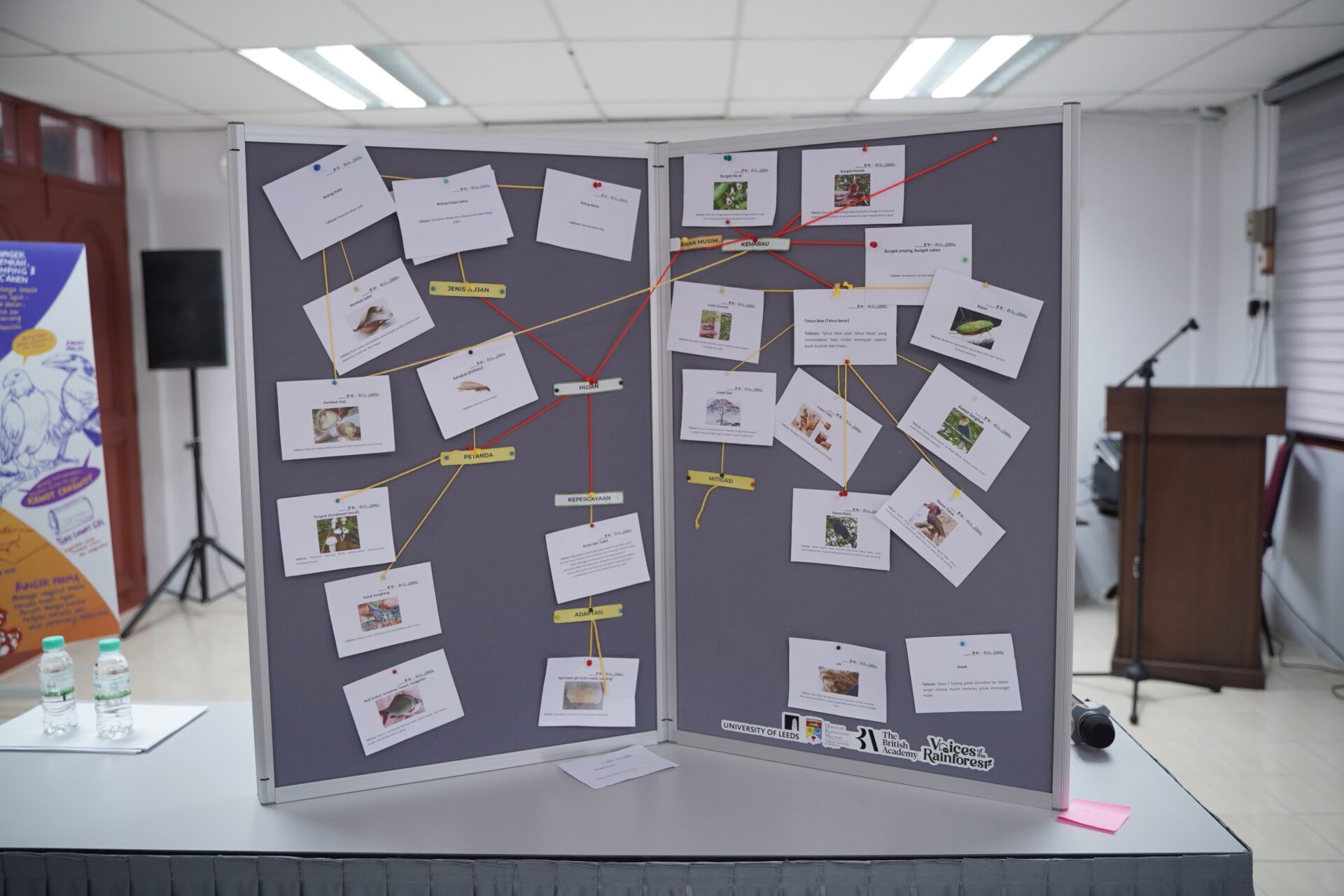
Traditional ecological knowledge mapping board showcasing seasonal indicators and ecological knowledge shared by the indigenous Jahai communities during the workshop.
In the second session, the communities came together to map out and connect all the issues they had raised earlier. This activity helped everyone see how problems in their living landscape were linked to many parts of their daily lives, from food sources and traditional practices to the well-being of the whole community. Logging, wildlife displacement and disruption of the ecosystem were not perceived as isolated problems but as issues that are closely linked and slowly affecting both their natural resources and cultural heritage. Through collective dialogue, the communities reached a common understanding that safeguarding the forest is central to sustaining both culture and education. This mapping process also strengthened solidarity between villages, as participants recognised shared experiences and opportunities for collective action.
In the third session, the communities focused on confirming and elaborating on indigenous Jahai traditional ecological knowledge, which the ‘Voices of the Rainforest’ project had previously documented through ethnographic fieldwork and conversations with elders. Indigenous Jahai people’s ecological knowledge is guided by four main ecological seasons: rainy season, blooming season, fruiting season and dry season. Each season is characterised by distinct ecological indicators that help guide daily activities, resource management and spiritual practices. For instance, the blooming of forest flower yellow goniothalamus, locally known as bungek penrah (Goniothalamus macrophyllus), marks the transition from rainy season to dry season, while the buzzing of honeybees signals the abundance of forest resources. The dry season is marked by the sound of cicadas and the ripening of forest fruits such as the jungle gourd, locally known as kembok hujj (Hodgsonia macrophylla). When the monkey jackfruit, locally known as kembok jias (Artocarpus rigidus) starts to appear and animals begin to migrate, this signifies the fruiting season has arrived. The return of the rainy season is signalled by the arrival of swallows, frogs, winged termites and the breeding of river fishes. This ecological calendar is deeply intertwined with how the communities adapt to changes in weather.
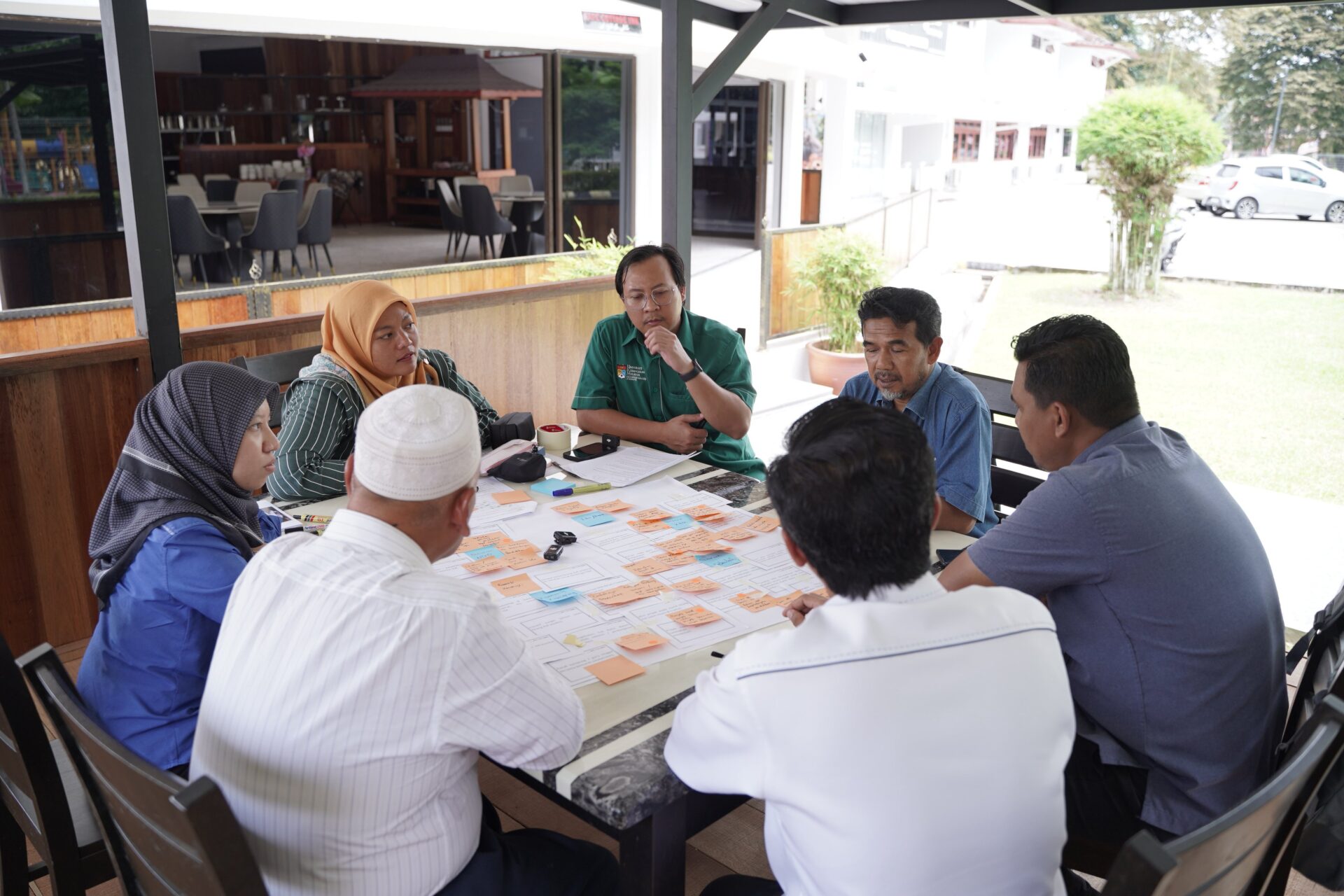
Breakout session with teachers and officers discussing strategies for integrating indigenous Jahai traditional ecological knowledge into the curriculum.
Practices such as weather reading through sed luwei gel (commonly known as tualang-honey wax) and traditional fish sanctuary systems, locally known as Akekchep, reflect the communities’ sustainable practices. Their spiritual beliefs also link natural events such as storms, heavy rain and thunder to karei and takel (husband-and-wife spirits in indigenous Jahai belief who guard the balance and restore harmony between humans and nature), demonstrating the profound relationship between nature and cultural values. Together, these narratives illustrate the depth of indigenous Jahai traditional ecological knowledge: a living knowledge system that is both practical and spiritual, passed down through time and still deeply relevant today in helping communities adapt to a changing climate.
The second part of the workshop, held on 8 September 2025, brought together 16 participants from various government agencies, indigenous schools, non-governmental organisations (NGOs) and conservation bodies to chart practical pathways for integrating indigenous Jahai traditional ecological knowledge into the national education landscape. This multi-agency session included officers from the Ministry of Education (MOE), represented by the Curriculum Development Division (BPK) and Teacher Professionalism Division (BPG). Other organisations involved included the Department of Orang Asli Development (JAKOA), Tiger Protection Society of Malaysia (RIMAU), Majlis Belia Orang Asli (MBOA), Royal Belum State Park, Sekolah Kebangsaan Sungai Rual, Sekolah Kebangsaan Banun and Sekolah Kebangsaan Sungai Tiang.
As the workshop moved into its second session, representatives from BPG and BPK shared practical ways of incorporating indigenous Jahai traditional ecological knowledge into classrooms. BPG highlighted the importance of structured teacher training that respects the community's culture and context. They suggested using an Artificial Intelligence (AI) system named Career Development Informative Kit (CerDIK) to map and plan training for teachers in indigenous schools, making cultural understanding an essential part of the process. They also proposed working with Universiti Kebangsaan Malaysia (UKM) to develop traditional ecological knowledge-based modules that match existing environmental education programmes. Beyond training, they suggested creating a national traditional ecological knowledge database that teachers can easily access and use in their lessons. BPK, on the other hand, focused on curriculum development. They recommended starting with a special traditional ecological knowledge module for indigenous schools and rural schools, mapping traditional ecological knowledge content to existing subjects instead of creating new ones. They also stressed that teaching materials should be simple, practical and ready to use, supported by short videos, clear guidelines and outdoor learning activities that fit the school’s local context.
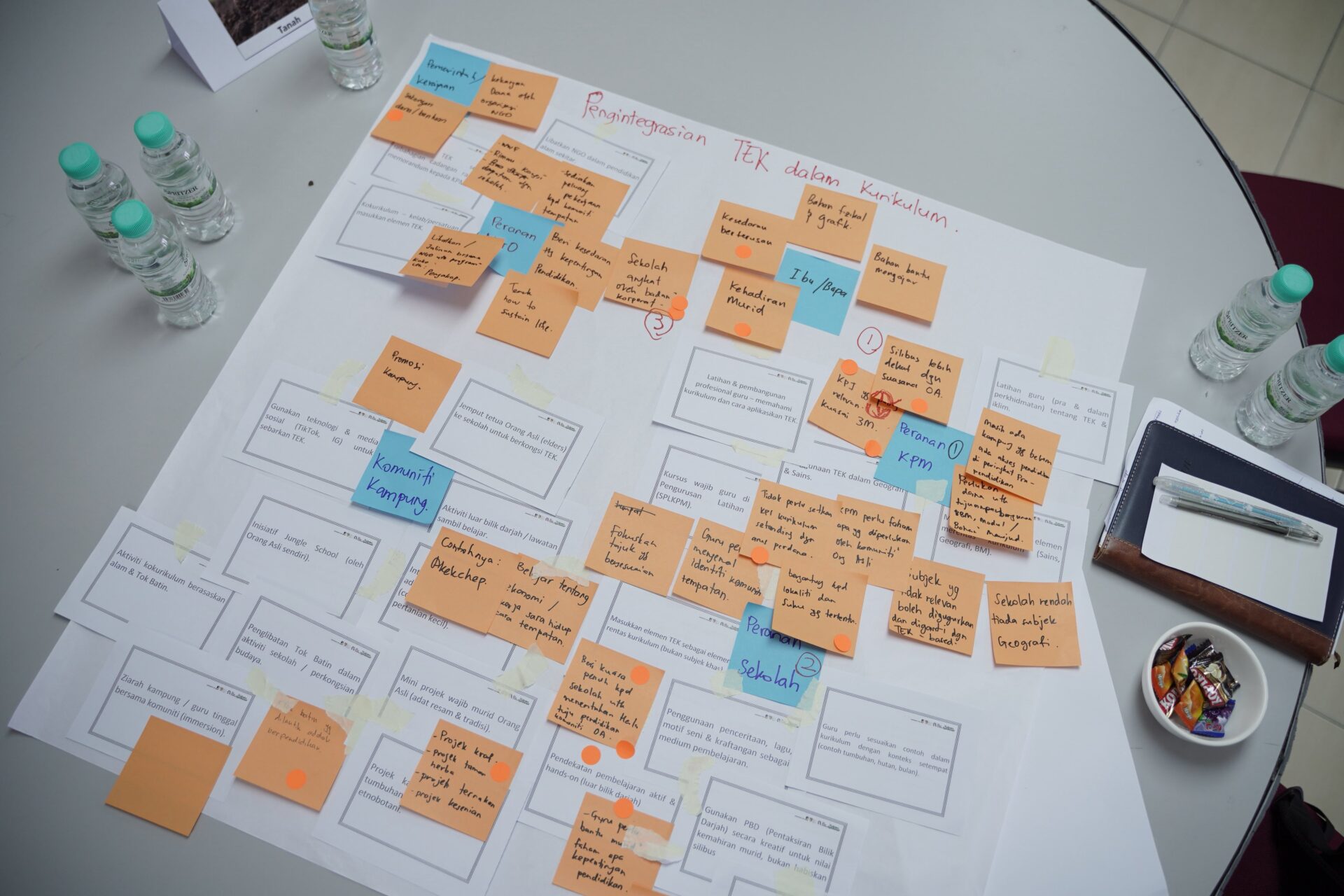
Traditional ecological knowledge curriculum integration output from the teacher–officer breakout session.
JAKOA officers expressed their full support for the work. Even though they are not directly involved in curriculum design, they suggested building a centralised database that combines traditional ecological knowledge, community knowledge and NGO materials, to make it easier for teachers to find and use local resources. Teachers from SK Sungai Rual, SK Banun and SK Sungai Tiang also shared their on-the-ground experiences. They called for teaching approaches that are realistic and suited to their children's needs. This includes focusing on literacy and numeracy alongside practical survival skills, using local examples like measuring bamboo in mathematics, and giving teachers more flexibility in mixed-level classrooms. They also emphasised the importance of involving Tok Batin (local knowledge holders) and parents, as well as embedding traditional ecological knowledge into co-curricular club activities to make learning more meaningful.
NGO representatives and conservation agencies echoed the value of strong partnerships. They emphasised bringing field data and local ecological knowledge directly into schools through regular information sharing, workshops and community-led activities. Rather than limiting the programme to school grounds, NGO representatives proposed conducting activities in villages to deepen community participation. They also underlined the role of Tok Batin as cultural knowledge holders and advocated for NGOs to continue acting as facilitators and bridges between communities and education systems.
The multi-agency session demonstrated that integrating traditional ecological knowledge into the education system requires more than content development. It also requires capacity building among teachers, flexible curriculum structures, localised resources and community partnerships that centre indigenous voices. By aligning these elements, the participants envisioned an education model where indigenous Jahai ecological knowledge not only informs classroom learning but also shapes how future generations understand and care for their ancestral land.