
Co-creating a TEK-based climate curriculum with indigenous Jakun communities
As the Ministry of Education moves closer to implementing the 2027 School Curriculum, an education reform framework designed to foster holistic, place-based, and competency-driven learning that integrates knowledge, skills, and interpersonal development. In this context, the participatory curriculum development workshop represented a key step in ensuring that community voices shape the curriculum from the ground up.
Held from 27 to 30 September 2025 at Rompin Beach Resort, Pahang, and part of phase four of the Voices of the Rainforest, the workshop brought together indigenous Jakun communities, teachers, government agencies, a State-Owned Enterprise (SOE) and other partners to identify and explore practical ways to integrate traditional ecological knowledge (TEK) into the curriculum based on their organisational perspectives and the 2027 School Curriculum framework. As the final workshop in this phase, it represented the culmination of collaborative engagements with multiple indigenous communities, all sharing the common goal of ensuring that traditional ecological knowledge is meaningfully reflected in future climate education.
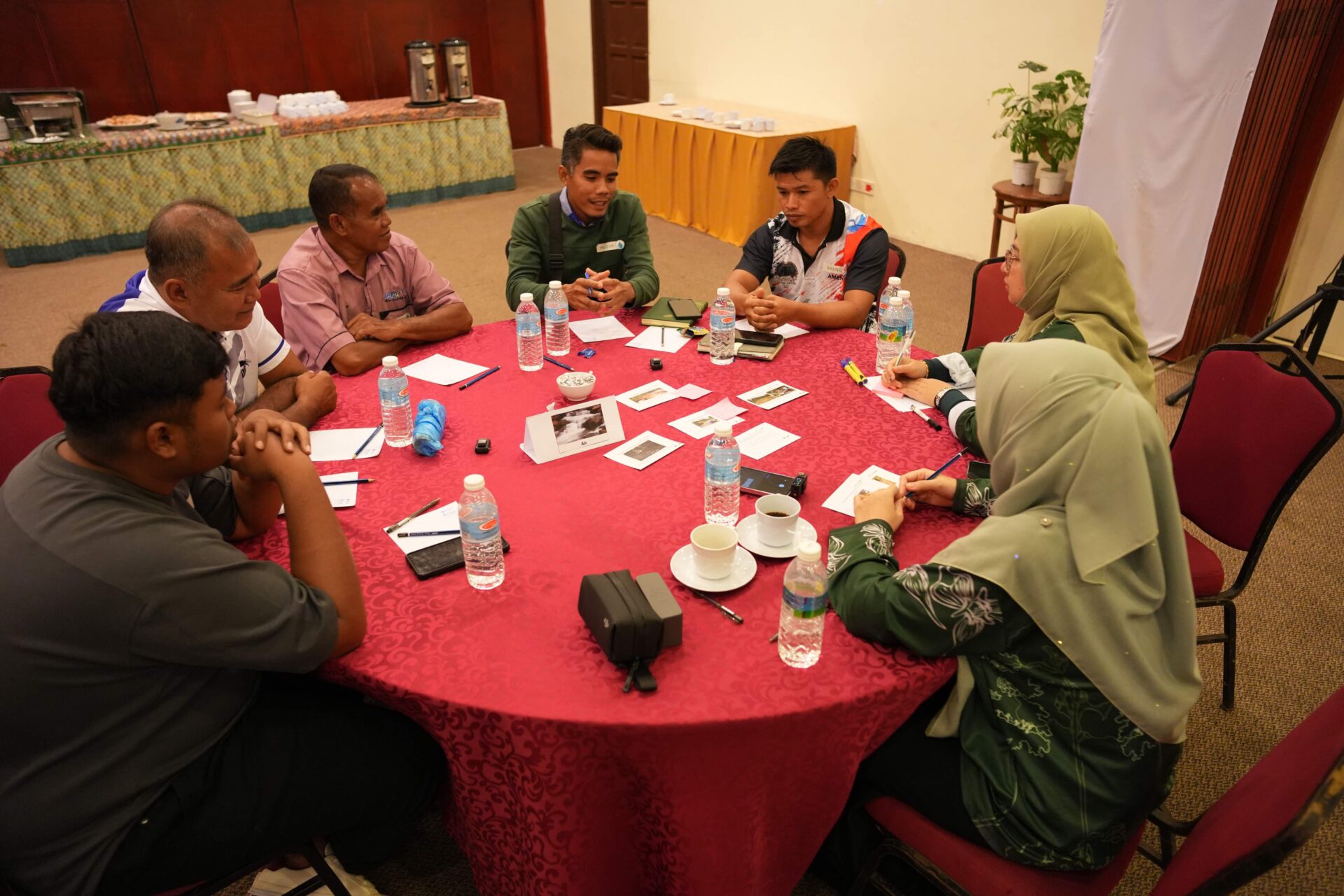
The first part of the workshop, conducted on 28 September 2025, focused on structured discussions with indigenous Jakun communities to identify key issues, map challenges and document their traditional ecological knowledge. Participants highlighted the impacts of land encroachment, water pollution and cultural change on their daily lives. A major concern raised was encroachment on customary land, particularly in Kampung Peta and Kampung Punan, where agricultural expansion, bauxite mining and logging have significantly altered the landscape. While some forest areas remain intact, others have been replaced by plantations.
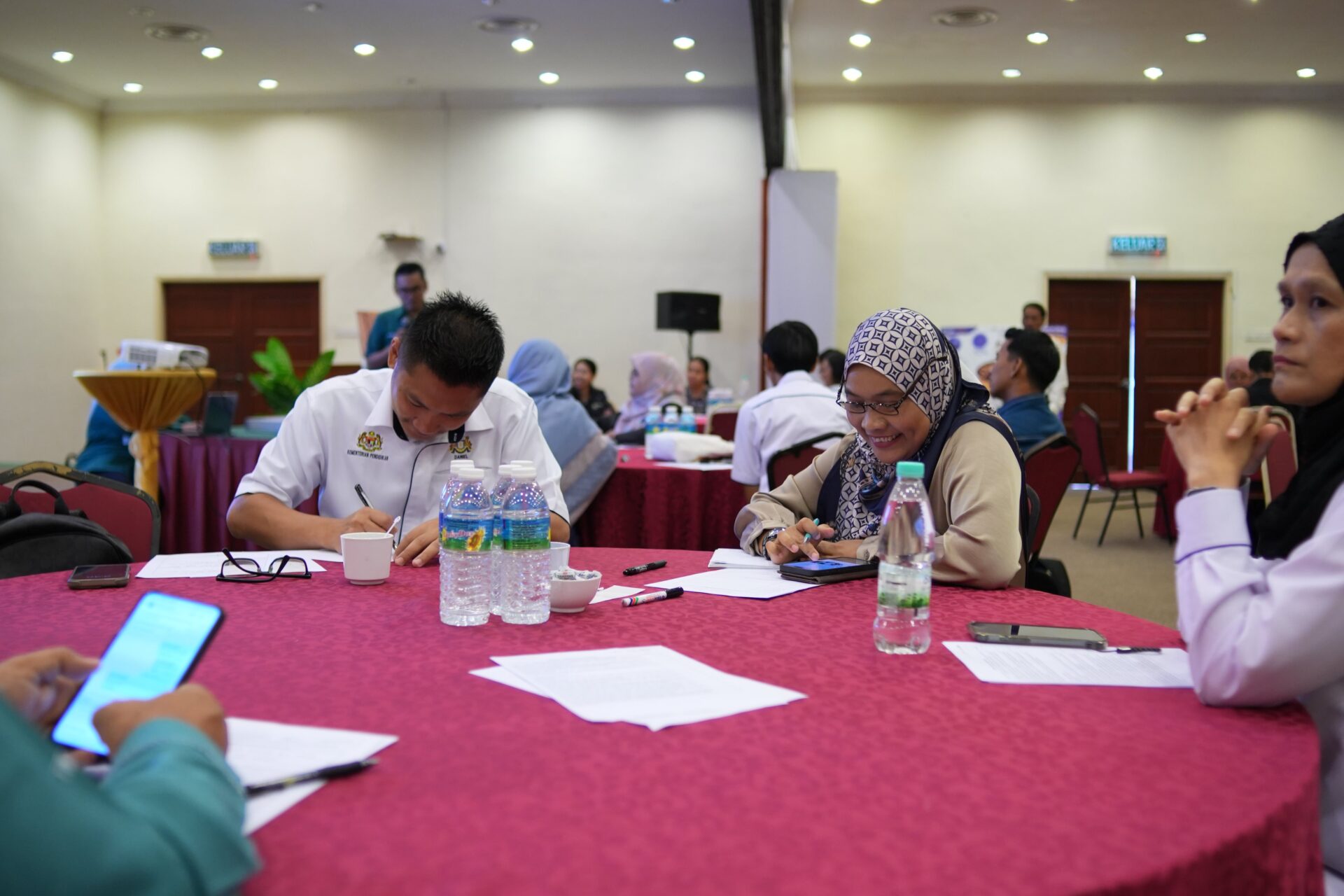
Day two of the workshop with participation from teachers, government officers and representatives of various agencies.
In Kampung Tanah Abang and Kampung Mentelong, land clearing has led to species loss and increased human-wildlife conflict as animals have been displaced from their habitats. In Kampung Peta, logging has reduced forest resources, polluted rivers and disturbed fish habitats, while the translocation of wildlife, such as collared elephants, has worsened the situation. Since 2016, the communities have also faced deteriorating water quality, limiting their access to clean water. Beyond land and resource concerns, participants also shared their worries about the decline of cultural practices such as Bela Kampung, which are not being practised as much by younger generations. Nonetheless, local efforts, including those led by Persatuan Cinta Budaya, continue to preserve and strengthen their cultural heritage.
In the second session, participants collectively mapped out the connections between key issues affecting their communities. They examined how land-use change, loss of forest resources, wildlife conflict and cultural erosion are interrelated, creating a chain of impacts that goes beyond ecological issues. The mapping exercise made these relationships more visible, illustrating how they influence water security, food sources and cultural identity. The discussion emphasised that land encroachment and degradation of the natural landscape are central drivers of many other social and ecological challenges faced by the communities.
The final communities session focused on documenting indigenous Jakun traditional ecological knowledge. Unlike the indigenous Semai and Jahai communities, Jakun traditional ecological knowledge places strong emphasis on wind and rain indicators, reflecting their close connection to riverine and coastal ecosystems. The indicators shared by participants varied between villages and were shaped by their local environmental conditions and experiences. Their knowledge includes recognising natural signs of rainfall and flooding, observing seasonal changes through specific flora and fauna and understanding how weather patterns influence food availability. It also encompasses distinct wind-related indicators, community adaptation strategies such as eco-tourism and belief systems centred around celau (a form of natural or spiritual retribution for violating taboos or showing disrespect to nature). This rich body of knowledge reflects sustainable practices cultivated across generations, which provide valuable insights for place-based climate education.

A group discussion session discussing strategies for integrating indigenous ecological knowledge into the 2027 school curriculum.
The second part of the workshop, held on 29 September 2025, involved participating agencies such as the Ministry of Education (MOE), represented by the Curriculum Development Division (BPK) and the Daily School Management Division (BPSH). Other organisations involved included the Johor State Education Department (JPN Johor), Pahang State Education Department (JPN Pahang), Department of Orang Asli Development (JAKOA) — Rompin District Office, Department of Orang Asli Development (JAKOA) – Mersing District Office, Department of Orang Asli Development (JAKOA) – Pahang State Office, Department of Orang Asli Development (JAKOA) – Putrajaya Headquarters (HQ), the Malaysian Meteorological Department (MetMalaysia) and the Johor Corporation Foundation (JCF).
In addition, two teachers and three students from participating indigenous schools also took part in the workshop. The indigenous schools involved were Sekolah Kebangsaan Peta, Johor; Sekolah Kebangsaan Punan, Johor; Sekolah Kebangsaan Tanah Abang, Johor; Sekolah Kebangsaan Labung, Johor, Sekolah Kebangsaan Denai, Pahang and Sekolah Kebangsaan Sungai Mok, Pahang.
Unlike previous workshops with the indigenous Semai and Jahai communities, this session took a more strategic approach by focusing on how traditional ecological knowledge can be integrated within the 2027 School Curriculum framework, by discussing the perspectives of each organisation. The workshop began with an overview of the project and key findings from earlier community workshops, providing participants with a shared understanding of the project’s objectives. Additionally, a creative session was held with children from indigenous Jakun communities, where they used natural pigments to draw and paint their interpretations of traditional ecological knowledge, expressing their connection to the surroundings. This combined effort helped anchor the indigenous Jakun workshop within a broader national initiative to embed indigenous knowledge in climate education and align it with future curriculum priorities.
The second session brought together all participants from different agencies to share their perspectives on how traditional ecological knowledge could be meaningfully embedded in the 2027 School Curriculum. Many participants supported a thematic and cross-subject integration approach, allowing traditional ecological knowledge to strengthen existing lessons rather than stand as a separate subject. Among the strategies proposed were developing digital and infographic learning materials for lower primary (typically ages seven to nine in the Malaysian school system), encouraging hands-on classroom projects such as scrapbooks, and introducing traditional ecological knowledge in phases, starting with indigenous schools before expanding further.
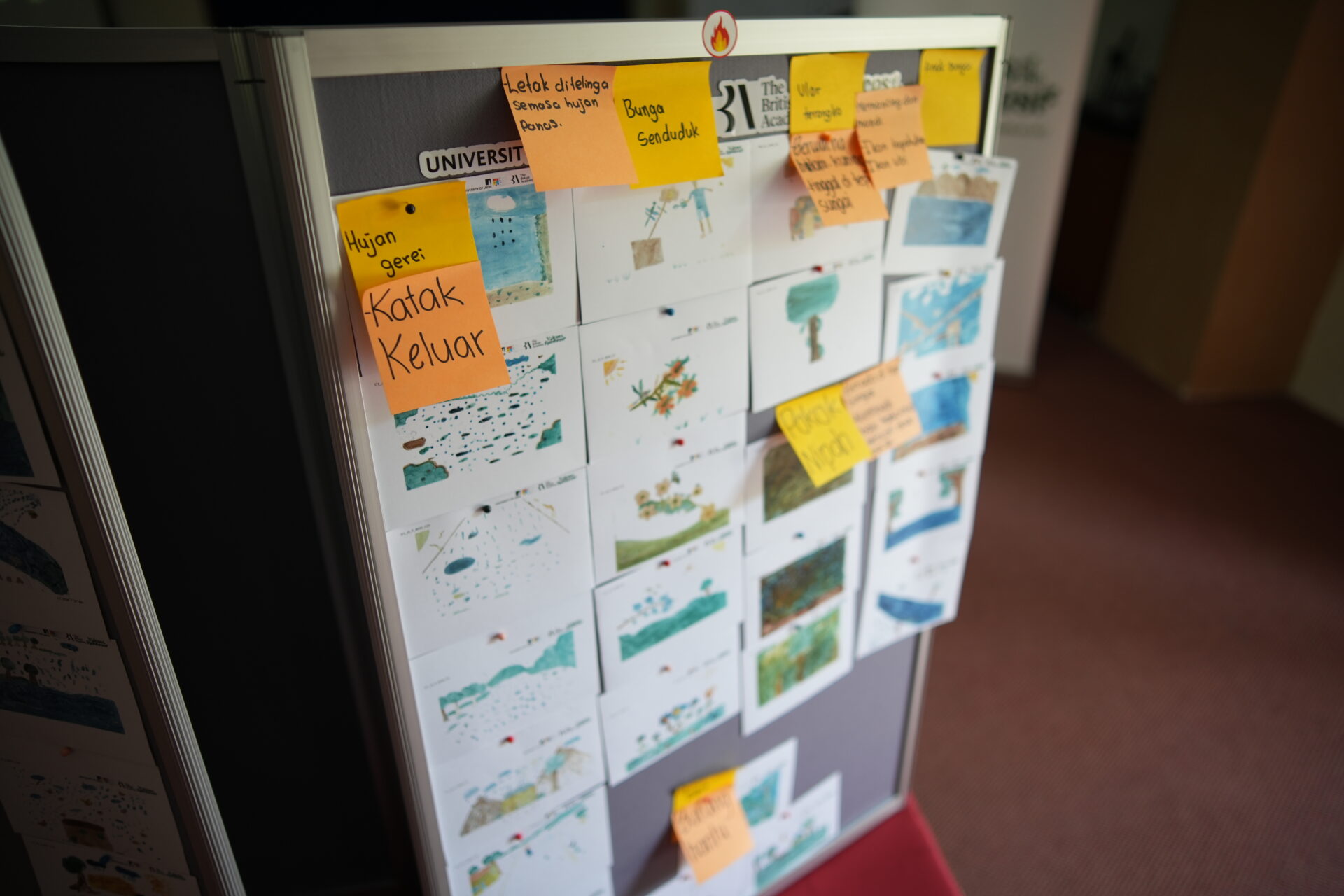
Workshop session with Jakun children, involving the categorisation of their drawings according to their understanding of ecological knowledge.
Participants also emphasised the need for a traditional ecological knowledge glossary to help standardise terms and make content more accessible to teachers. For assessment, they suggested using oral presentations, classroom observations and written reflections to encourage more practical and flexible learning. Many felt that while “sisipan” (content insertion) is useful, it may not be enough since it is not mandatory. Instead, they proposed dedicated traditional ecological knowledge modules aligned with the Dokumen Standard Kurikulum dan Pentaksiran (DSKP) (literally translated as Curriculum and Assessment Standard Document) to ensure a more consistent and lasting impact. Some teachers also suggested including traditional ecological knowledge as “Do You Know?” corners or highlights in textbooks to increase its visibility in everyday lessons.
The workshop concluded with group presentations, where participants outlined their collective ideas and strategies for integrating traditional ecological knowledge into the 2027 School Curriculum. The presentations reflected the distinct perspectives and responsibilities of teachers, policymakers and partners, yet converged on shared priorities of flexibility, readiness and sustainability. Many underscored the need to strengthen teacher training, develop practical and accessible teaching resources and build stronger partnerships with local communities to ensure effective implementation. The closing session reflected a shared belief that traditional ecological knowledge is not just a form of cultural heritage but also a valuable educational resource that can shape how future generations understand and adapt to climate change.
This workshop with indigenous Jakun communities marks another important milestone in co-creating a climate curriculum that reflects Malaysia’s rich indigenous knowledge. By combining communities’ wisdom with curriculum planning, the workshop demonstrated how local knowledge can inform national climate education strategies in meaningful and practical ways. With the 2027 School Curriculum set to be introduced, this collaboration represents a step toward a more inclusive, place-based and sustainable education system.