
Co-creating a TEK-based climate curriculum with indigenous Semai communities
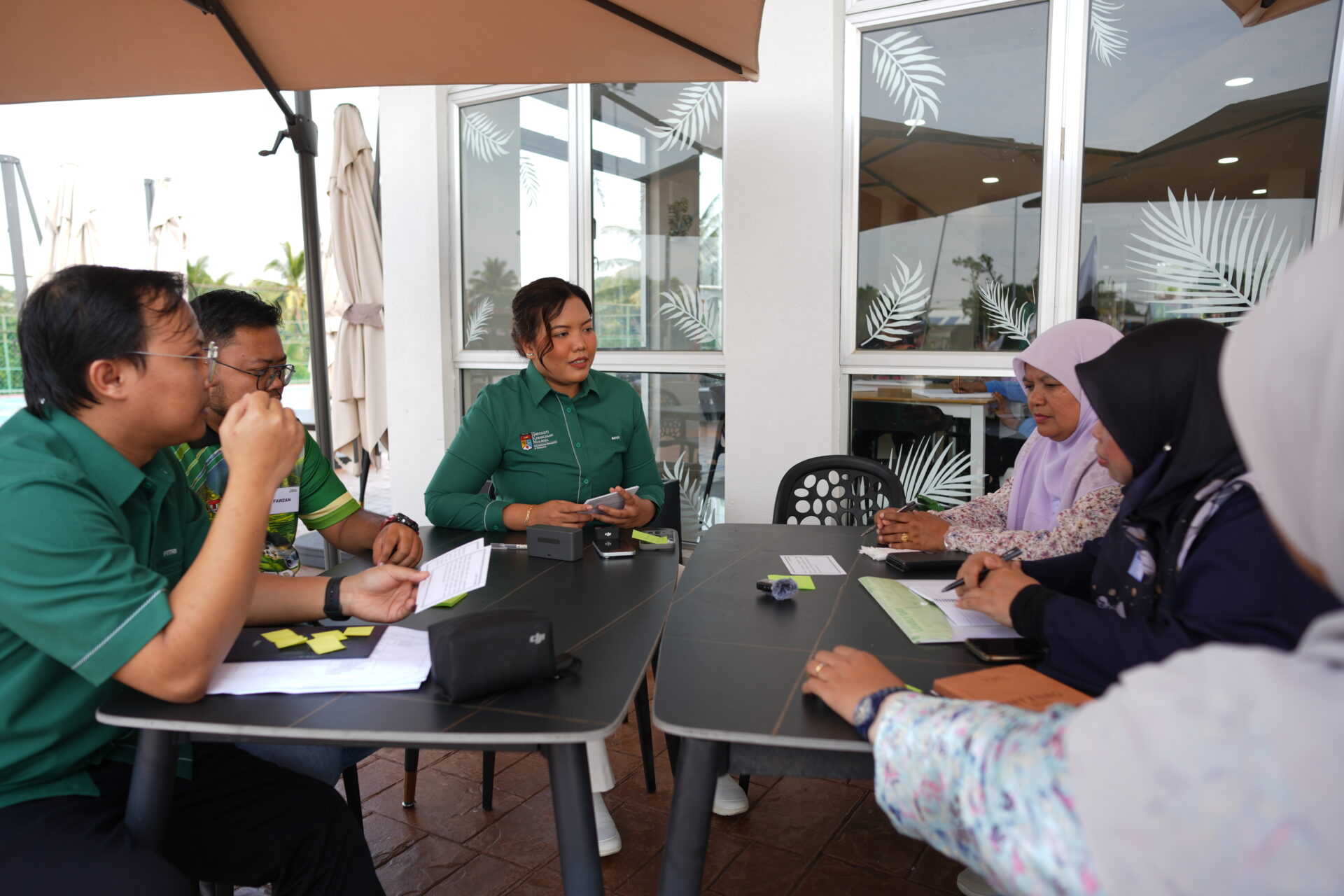
From 2 to 5 August 2025, the Voices of the Rainforest participatory curriculum development workshop brought together indigenous Semai communities, teachers, government agencies, children and researchers in Kuala Lipis, Pahang, to co-create a traditional ecological knowledge (TEK)–based climate curriculum. Hosted at Jelai Inn Boutique Hotel, the four-day participatory workshop was structured as two distinct workshop sessions: a community-led session on 3 August 2025 and a multi-agency session on 4 August 2025.
The first session on 3 August 2025 centred the voices of the indigenous Semai communities. Twelve participants attended the workshop from Semai villages, which comprised Penghulu, Tok Batin and village representatives from Pos Lanai (Kampung Lanai Baru, Kampung Perangkap, Kampung Kuala Suar, Kampung Kolam, Kampung Tanjung Bakar, Kampung Pantos), Pos Betau (Kampung Lanchang, Kampung Sentoi, Kampung Simoi Baru, Kampung Ulu Milot, Kampung Kuala Milot, Kampung Belida, Kampung Kabang Baru) and Kuala Koyan (Kampung Kuala Koyan). The workshop unfolded across three sessions: (1) confirming the issues faced by the communities, (2) mapping and connecting those issues and (3) confirming and elaborating on the indigenous Semai communities’ traditional ecological knowledge. In the first session, participants were divided into three breakout groups, each of which was named after a natural element: water, fire and earth.
In the first breakout discussion, participants were divided into three mixed-village groups, ensuring balanced inputs and perspectives from Pos Lanai, Pos Betau and Kuala Koyan were heard together. The water group examined differing views around a proposed dam project between Kampung Lanchang and Kampung Pantos; the fire group highlighted the long-term effects of resettlement without detailed planning, restrictions on traditional socio-economic practices and diminishing access to forest-based foods; while the soil group raised concerns about customary land, noting that some areas have been declared as forest reserve.
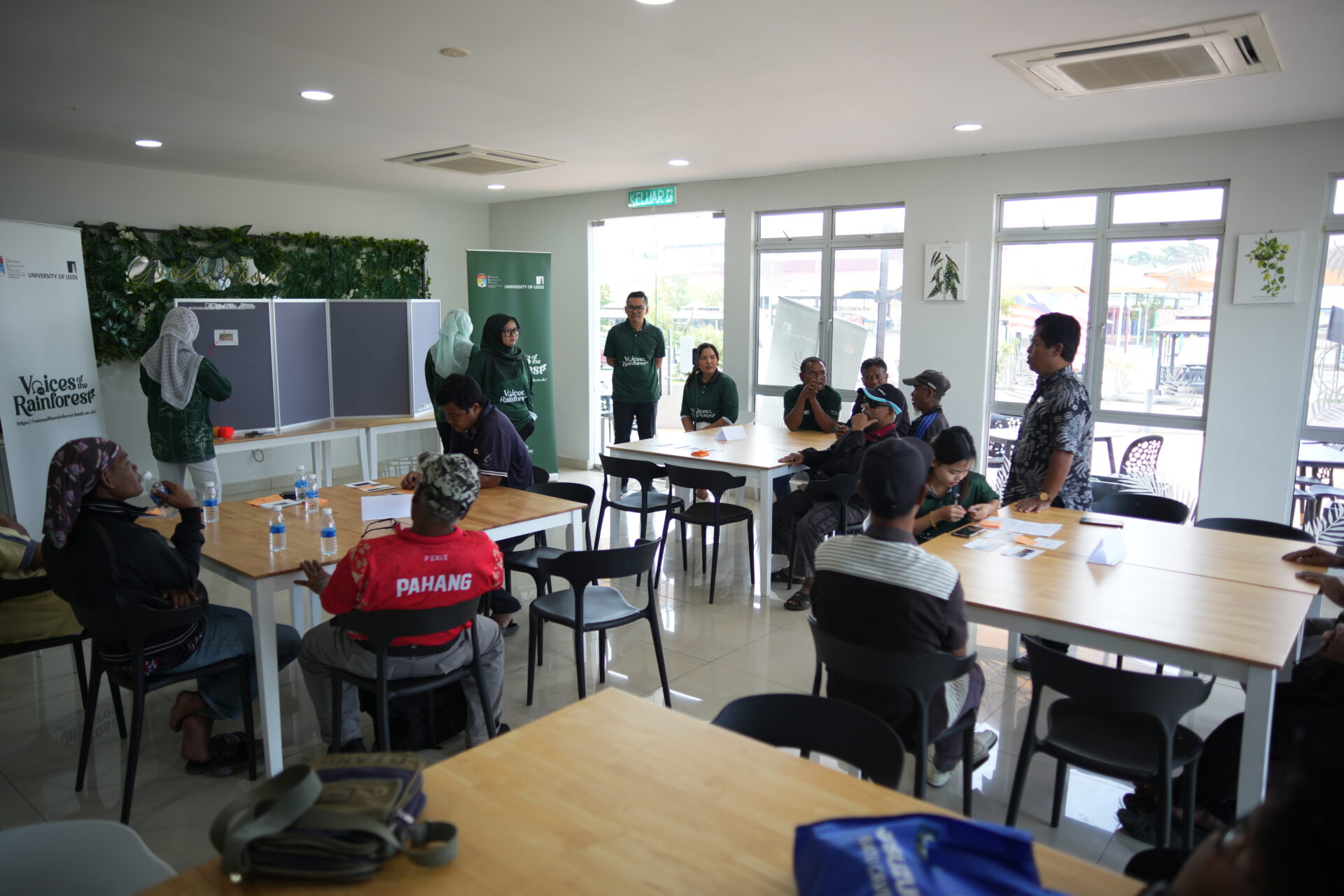
Participants from different communities and villages exchanged perspectives during the issue-mapping session, identifying shared priorities for their communities.
In the second session, all participants from the 14 villages came together to identify common concerns. Despite the diversity of perspectives, they reached a shared conclusion: the most pressing and cross-cutting priorities are customary land rights and agricultural land. Alongside these issues, through mapping in the third session, the communities also helped clarify and enrich indigenous Semai communities’ traditional ecological knowledge.
Much of the traditional ecological knowledge had been documented earlier in the project through ethnographic fieldwork. Participants provided detailed explanations of the jungle flame flower, locally known as bunga gapeh (Ixora sp.), describing it as a cold season distinguished by the presence of winged termites (Kemerchek). They also contributed other ecological indicators, such as the greater racket-tailed drongo, locally known as burung jejawi (Dicrurus paradiseus), Malayan horned frog, locally known as katak mengkang (Pelobatrachus nasuta); the gold-ringed cat snake, locally known as terasang gerik (Boiga dendrophila); and the green cicada, locally known as ranyot (Dundubia sp.).
Importantly, indigenous beliefs like terlaj (the implications of violating taboos) were recommended for inclusion, given their close connection to how the communities read and interpret weather changes. These insights highlighted the breadth of ecological knowledge within indigenous Semai communities’ worldview.
The second session, held on 4 August 2025, brought together representatives from key agencies and organisations to co-create the traditional ecological knowledge-based climate curriculum. Participating agencies included the Ministry of Education (MOE), represented by the Curriculum Development Division (BPK) and the Educational Planning and Policy Research Division; the Climate Change Policy Section under the Ministry of Natural Resources, Environment and Climate Change (NRECC); the Malaysian Nature Society (MNS) and the Department of Orang Asli Development (JAKOA). The Department of Orang Asli Development (JAKOA) was represented at both the national level and the Lipis District Office.

Children translated their intergenerational traditional ecological knowledge into nature-based colour drawing activities.
To ensure classroom realities were reflected in the discussion, teachers from five indigenous Semai schools in Pahang – Sekolah Kebangsaan Lenjang, Sekolah Kebangsaan Titom, Sekolah Kebangsaan Betau, Sekolah Kebangsaan Lanai and Sekolah Kebangsaan Kuala Koyan – joined the dialogue with agency officers, contributing their direct experiences of teaching and learning in indigenous schools. Each school was represented by two teachers, bringing the total to 10 teachers.
In parallel, 15 children from the participating schools engaged in a child-led analysis session, where they shared their perspectives and interpretations of traditional ecological knowledge through drawing, guided discussions and group reflections. The children identified key themes such as local plants, animals, insects and traditional activities connected to the lunar phases, relating these to their own daily experiences. Their insights highlighted how indigenous Semai communities’ traditional ecological knowledge is understood, interpreted and valued by the younger generation. This child-led analysis not only complemented the development of the curriculum but also reinforced the importance of embedding traditional ecological knowledge in ways that reflect children’s lived realities and encourage their active participation in learning.
The workshop with officers and representatives from various agencies was structured in three focused sessions. The first session introduced the project, outlining its methodology and presenting preliminary outputs to ensure all participants shared a common understanding of the project goals. The second session was conducted as a breakout discussion, where participants were divided into four groups to explore three major themes: indigenous education, traditional ecological knowledge and climate change.

In the third session, agencies and teachers discussed pathways for integrating traditional ecological knowledge into the school curriculum.
The discussions revealed a number of pressing concerns. One group stressed the value of holding joint discussions, bringing teachers, ministry officers and agencies together so that community issues could be heard directly Another group, working closely with teachers, recommended that all newly appointed or pre-service teachers in indigenous schools should receive specialised training, and where possible, teachers from indigenous communities should be posted back to their own schools or communities. A third group, represented by JAKOA, raised concerns about limited participation of teachers in community activities, noting that many teachers live outside the villages and only come in to teach, with little cultural assimilation. Meanwhile, the fourth group discussed the risks of applying the indigenous Semai language textbook from Perak directly in Pahang and highlighted that children struggle with learning retention due to the absence of a conducive and supportive home setting.
The third session focused on how traditional ecological knowledge could be meaningfully integrated into the school curriculum. Participants proposed adopting active learning approaches to make lessons more engaging and embedding traditional ecological knowledge holistically across core subjects such as science, geography, civics and Bahasa Melayu, ensuring alignment with the local context and indigenous culture. They also emphasised the need for professional development and tailored training modules for pre-service teachers newly posted to indigenous schools, so that they are better equipped to teach in culturally relevant ways. Importantly, participants stressed the inclusion of communities as a source of reference and local expertise, alongside the development of contextual teaching materials that reflect indigenous Semai communities’ traditional ecological knowledge.